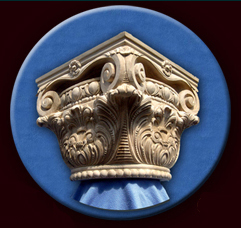
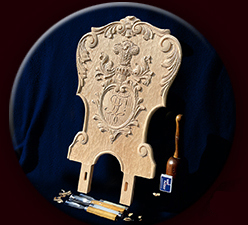
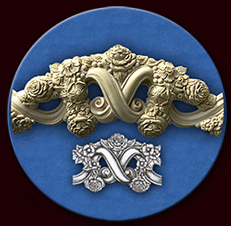
....Bookflip Stuhl-Lenen ... klick hier... ....... DiaShow Kapitelle ... klick hier... ....... DiaShow Ornamente ...klick hier...
 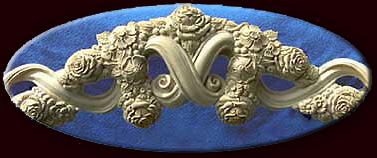 |
für ein Großes Bild - bitte auf das Bild klicken
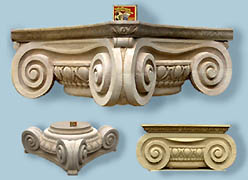 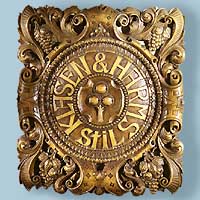 |
.großes Bild ?,....... bis gewünschte Bild anklicken.
für ein Großes Bild - bitte auf das Bild klicken
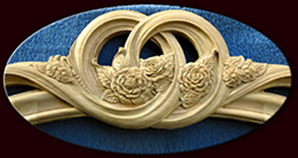
Seit Jahrhunderten sind handgeschnitzte Ornamente und Schnitzarbeiten Ausdruck von Stil, Handwerkskunst und künstlerischer Veredelung. Ob als dekoratives Element an historischen Möbelstücken, als kunstvolle Verzierung in sakraler Architektur oder als individuelle Gestaltung an Türen, Fachwerkhäusern und Deckenbalken – jedes Ornament erzählt eine Geschichte. In der Werkstatt von Bildhauermeister Manfred Gerlach entstehen solche Werke noch heute in echter Handarbeit – individuell, maßgefertigt, einzigartig.
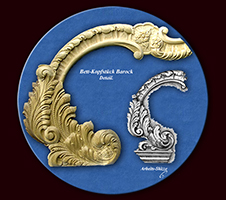
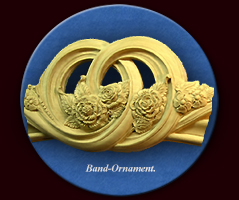
Ornamente handgeschnitzt sind nicht nur dekorativ, sondern transportieren Stilepochen, Emotionen und Botschaften. Von barocken Akanthusblättern über gotische Maßwerkformen bis hin zu Jugendstil-Reliefs – die Bandbreite ist nahezu unbegrenzt. Ob floral, figürlich, geometrisch oder symbolisch: Jedes Ornament wird nach Kundenwunsch geschnitzt, oft anhand alter Vorlagen oder neuer Entwürfe.
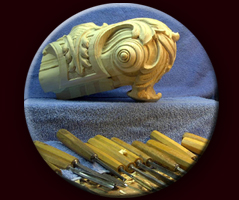
Am Anfang steht eine Idee oder eine Vorlage – manchmal ein Fragment eines alten Möbels, eine historische Fotografie oder einfach eine Skizze. Daraus entsteht ein maßstabsgetreuer Entwurf. Das ausgesuchte Holz – meist Linde, Eiche oder Nussbaum – wird vorbereitet, und die Schnitzarbeit erfolgt komplett von Hand, mit traditionellen Werkzeugen, feinem Gefühl für Formen, Tiefen und Stil. Ob geschnitzte Zierleisten, Kapitelle, Deckenrosetten, Stilrahmen, Möbelornamente oder Restaurationsstücke: Jede Schnitzerei ist ein Unikat und wird genau an den architektonischen oder gestalterischen Kontext angepasst.
Schnitzereien an Haustüren und Innentüren
Zierornamente für historische Möbel oder Neuanfertigungen
Restaurierte Fachwerk-Elemente
Ornamente für Altäre, Kanzeln, Deckenbalken
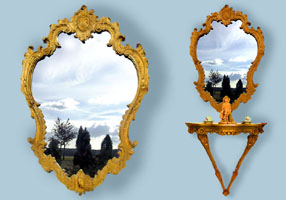
Stilrahmen und Spiegelrahmen
Sonderanfertigungen für Innenarchitektur oder Reproduktionen
Besonders beliebt sind Einzelanfertigungen nach Maß, die exakt zu einem bestimmten Möbel oder Raum passen. Auch in der
denkmalgerechten Restaurierung spielt die handwerkliche Holzschnitzerei eine wichtige Rolle.
Die Preise richten sich nach Größe, Detailgrad, Holzart und gewünschtem Stil. Eine einfache Rosette beginnt im unteren dreistelligen Bereich, aufwendige Einzelstücke mit tiefem Relief und großer Fläche können deutlich darüber liegen. Jedes Stück wird individuell kalkuliert.
Bildhauermeister Manfred Gerlach fertigt seit Jahrzehnten individuelle Holzschnitzarbeiten – vom historischen Ornament bis zur
modernen Stilinterpretation. Mit sicherem Gespür für Proportion, Stil und Material entstehen wahre Kunstwerke für Generationen.
Seine Werke stehen für:
→ Traditionelle Holzbildhauerei,
→ Maßarbeit und Originalität,
→ Ornamente geschnitzt mit Hand und Herz.
.........................................................................
For centuries, hand-carved ornaments and woodcarvings have been a symbol of craftsmanship, elegance, and artistic refinement. Whether as decorative elements on historic furniture, intricate carvings in sacred architecture, or custom designs on doors, timber-framed houses, and ceiling beams – each ornament tells its own story. At the workshop of master sculptor Manfred Gerlach, such pieces are still created by hand – custom-made and truly one of a kind.
Hand-carved ornaments go beyond decoration – they reflect eras, emotions, and messages. From baroque acanthus leaves and gothic tracery to art nouveau reliefs – the design possibilities are nearly endless. Whether floral, figurative, geometric, or symbolic: each ornament is individually carved, often based on historical models or newly developed sketches.
Everything begins with an idea or reference – perhaps a furniture fragment, a historic photograph, or a simple sketch. A scaled drawing is created, the wood selected (often linden, oak, or walnut), and the entire carving is done by hand, using traditional tools and a deep understanding of depth, form, and style. Whether carved moldings, capitals, ceiling rosettes, stylistic frames, furniture ornaments, or restoration elements – each piece is a handcrafted original, tailored to its architectural or decorative context.
Door and interior door carvings
Decorative ornaments for antique or new furniture
Restored elements for timber-framed houses
Carvings for altars, pulpits, or ceiling beams
Custom mirror and picture frames
Tailored interior design pieces or historical reproductions
Pricing depends on size, detail, wood type, and stylistic complexity. A simple rosette starts at a few hundred euros; elaborate reliefs or large custom pieces can cost significantly more. Every piece is calculated individually.
Master sculptor Manfred Gerlach has crafted unique woodcarvings for decades – from historic ornaments to modern style
interpretations. His work combines tradition, precision, and artistic flair, resulting in heirloom-quality pieces for
generations. His promise:
→ Authentic wood sculpture,
→ Custom work and originality,
→ Ornaments carved with hand and heart.
..........................................................................
Heraldry Lexicon – Heraldry made simple.
This Heraldry Lexicon explains the most important terms of heraldry in a clear and accessible way, while remaining faithful to traditional rules. It is aimed at everyone interested in family coats of arms, noble arms, civic arms and fraternity arms – whether you already have a crest or are just getting started.
The explanations are written for readers without specialist training in heraldry, but they follow the principles of classical European heraldry. They do not replace scientific literature, but provide a solid foundation for understanding coats of arms and heraldry.
What is heraldry?
Heraldry is the study of coats of arms. It deals with the origin, structure, design, description (blazon) and history of arms. Originally, heraldry helped to identify knights and nobles on the battlefield and at tournaments. Today it plays an important role in family history, local history, genealogy and art history.
Structure of a classical coat of arms
A full heraldic achievement consists of several elements that form a unified composition. Depending on period, region and type of arms, some elements may be added or omitted, but the main parts are:
Basic heraldic terms – in brief
Tinctures: Heraldry distinguishes metals (gold = Or, silver = Argent), colors (red = Gules, blue = Azure, black = Sable, green = Vert, purple = Purpure), and furs (such as ermine and vair). A central rule is: no color on color, no metal on metal.
Ordinaries: simple geometric shapes such as fess, pale, cross, saltire, bend and similar elements that structure the field. In a blazon, ordinaries and divisions are mentioned first.
Divisions: ways of dividing the shield into fields, for example: per fess (horizontally), per pale (vertically), quarterly, per bend, and combinations of these.
Charges: all non-geometric figures – animals (lions, eagles, bears), plants (roses, oak leaves), objects (keys, swords, wheels), buildings (castles, towers) and many more. Charges often have symbolic meanings.
Blazon: the precise description of a coat of arms in heraldic language. A correct blazon should allow a heraldic artist to draw the arms without seeing the original illustration.
Types of coats of arms – who uses arms?
Over the centuries, different types of arms have developed, each associated with certain bearers:
How a new coat of arms is created
The design of a new coat of arms should always respect heraldic rules and avoid confusion with existing arms. In practice, the process often follows these steps:
In many countries, the use of a coat of arms is generally permitted, but a new design should be distinctive and must not deliberately imitate someone else’s arms.
Unauthorized use of another person’s arms may infringe name or trademark rights. For this reason, it is wise to have a new coat of arms checked by a heraldic expert and, if appropriate, registered in a recognized armorial. Binding legal advice, however, can only be given by a qualified legal professional.
Literature and sources on heraldry
Anyone wishing to study heraldry in more depth will find extensive information in heraldic literature and associations, for example:
Questions about heraldry or a carved coat of arms?
If you have questions about the design of a coat of arms or if you would like to commission a hand-carved wooden coat of arms, feel free to contact me by e-mail with a brief description of your ideas regarding motif, size and intended location.
Heraldik und Wappenkunde, die Kunst der Wappen.
Heraldik und Wappenkunst, Familienwappen handgeschnitzt naturbelassen, oder in den heraldischen Farben farbig gefasst, sind Heute wieder 'in'.
Wappen und Heraldik, Adelwappen, Familienwappen, Verbindungswappen ...