



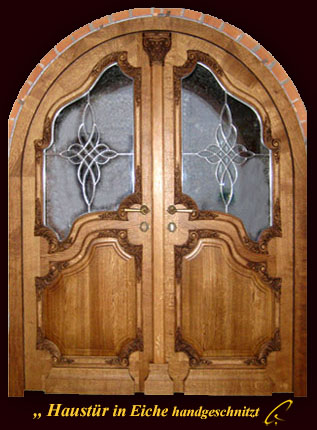
Traditional carved wooden doors — crafted by a master woodcarver Manfred Gerlach
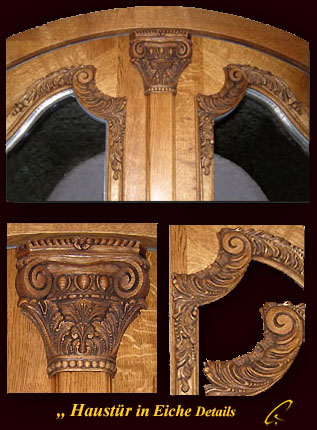
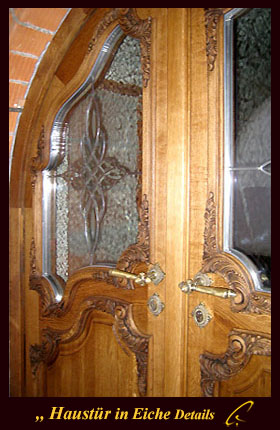
“Front doors”... your door refined with genuine hand-carving.
|
|
|
|
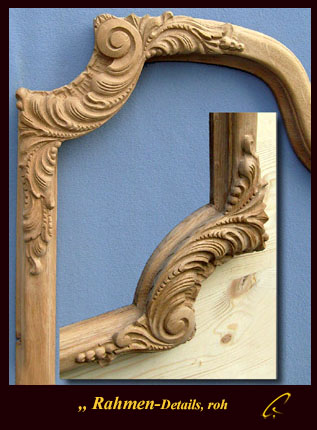
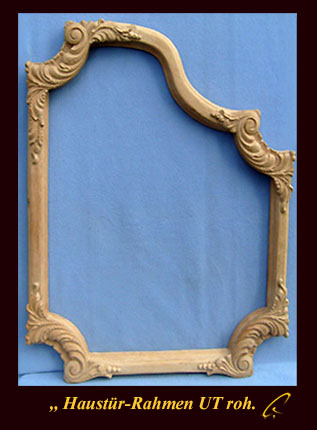
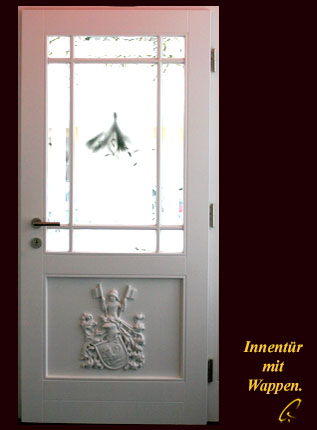
.................................................................................................. Your master joiner builds the door..... and master sculptor Manfred Gerlach .... designs and carves it according to your ideas.
|
|
|
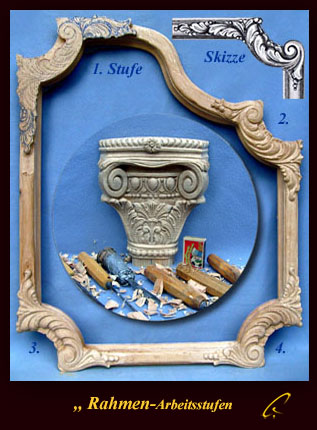
................................................................. Your master joiner builds the door..... and master sculptor Manfred Gerlach .... designs and carves it according to your wishes.
“ back to top ” ......
|
|
|

|
|
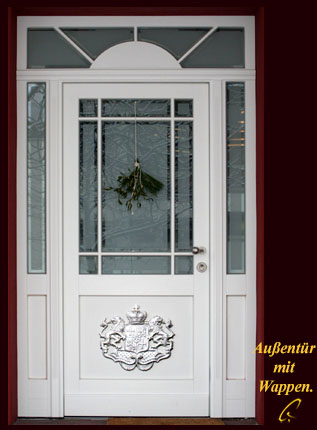
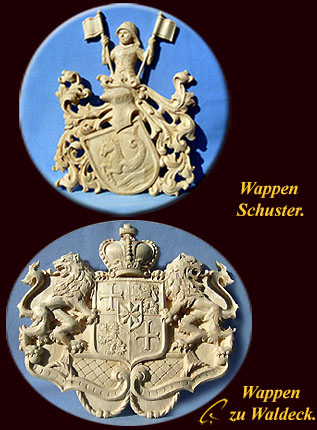
. ........................................................................ Your master joiner builds the door..... and master sculptor Manfred Gerlach .... designs and carves it according to your ideas. .......
.
Request by email
| Information about Bildhauerei Gerlach ... click here .. | Imprint | Privacy policy | e- mail contact: |
|
Historic examples of carved doors can be found in almost every old town. Even today they are admired and, thanks to their harmonious design, give the viewer a sense of inner calm. Very beautiful doors and gates include the door leaves of St. Maria im Kapitol in Cologne, the famous wooden doors of the parish church St. Maria im Kapitol. The capitol doors in Cologne contain some of the most important preserved relief cycles from the 11th century. However, they did not receive proper recognition until the 19th century. In Central Europe there are several medieval bronze doors of this type, but the Cologne door leaves are the only carved wooden doors from that period. It is not only their rarity that makes them special, but also the quality of the carving and the colouring. During a careful restoration in the 1930s, the brilliant, strong colours were revealed once again. The two door leaves, 485 cm high and together 248 cm wide, each consist of three oak planks on which the walnut frames and panels are mounted. Around them, on each leaf, runs a larger, richly decorated moulded frame. Between the panels and the outer frame you can see the painted tituli – the short headings belonging to each scene. Around them follow relief-like carvings that can be described as thin beaded mouldings and openwork interlaced bands. These and round knobs at the corners frame the individual scenes. The beaded mouldings hide the joints between panel and braided band, so that the whole appears as one single carved relief. In reality, the individual frame elements are fixed to the oak planks with iron pins and nails that run through the knobs. The outer frame mouldings are fixed in the same way, just without additional decoration on the knobs. The smaller parts, such as the beaded strips and inscription bands, are attached with thinner, almost invisible nails. This construction follows early Christian and late antique models that were once quite common. Today, however, only very few doors of this type have survived. |